

Is It Healthier to Be Circumcised or Uncircumcised?
Blog

Dr Tan Kok Kuan
Men’s Health & Sexual Health Doctor
MBBS (S’pore), Cert. Men’s Health, Cert. Clinical Dermatology,Member, Academy for Men’s Health (Singapore)Member, Singapore Association for the Study of ObesityMember, International Society of Sexual Medicine

Neither circumcision nor being uncircumcised is inherently healthier for all men. While circumcision may reduce the likelihood of some health issues, most uncircumcised men remain healthy and do not experience significant medical problems when proper hygiene practices are followed.
Understanding the differences between circumcised and uncircumcised men can help individuals make informed decisions and recognise when medical evaluation may be beneficial.
Key Takeaways
- Neither circumcision nor being uncircumcised is inherently healthier for all men.
- Circumcision may offer hygiene and infection-related benefits, but most uncircumcised men remain healthy with proper care.
- Circumcision carries some surgical risks but is generally safe when performed by an experienced doctor.
- The procedure is typically only medically necessary when specific conditions are present.
Does Circumcision Make Hygiene Easier?
Circumcision generally does make genital hygiene easier. With no foreskin covering the head of the penis, dead skin cells, oils and moisture are less likely to accumulate around the glans.
For uncircumcised men, good hygiene requires regular retraction of the foreskin and gentle cleaning underneath. If hygiene is neglected, smegma can build up beneath the foreskin, which may contribute to irritation, inflammation and unpleasant odours.
Most uncircumcised men can maintain good genital health when proper hygiene practices are followed. The key difference is that circumcision reduces the amount of routine cleaning required, making genital hygiene simpler and more convenient for some men.
Does Circumcision Affect STI Risk?
Circumcision has been associated with a reduced risk of acquiring certain sexually transmitted infections (STIs). However, circumcision does not completely eliminate STI risk. Circumcision should therefore be viewed as one component of sexual health rather than a substitute for established STI prevention measures.
Research suggests that circumcision may reduce the risk of certain infections because the foreskin can create an environment that allows viruses and bacteria to persist more easily.
- HIV: A lower risk of HIV acquisition compared to uncircumcised men.
- Human Papillomavirus (HPV): A lower risk of infection with certain HPV strains that can cause genital warts and cancers.
- Herpes Simplex Virus (HSV-2): A modest reduction in the risk of genital herpes infection has been reported in some studies.
Both circumcised and uncircumcised men can contract and transmit infections, making condom use, regular STI screening and safer sexual practices important regardless of circumcision status.
Does Circumcision Affect Sexual Function?
Current evidence suggests that circumcision does not significantly affect erectile function, sexual satisfaction or fertility for most men. While some men report differences in penile sensitivity after circumcision, research has not consistently shown that circumcised or uncircumcised men experience better sexual function overall.
Likewise, there is no strong evidence that circumcision negatively affects fertility or a man's ability to conceive children.
Are There Any Health Risks Associated With Circumcision?
Circumcision carries some health risks because it is a surgical procedure. However, complications are generally uncommon when the procedure is performed by a qualified doctor under appropriate medical conditions.
Potential risks include:
- Bleeding: Minor bleeding can occur during or after the procedure and usually resolves without significant treatment.
- Infection: As with any surgical procedure, there is a risk of infection at the treatment site.
- Pain and Discomfort: Temporary pain, swelling and tenderness are common during the recovery period.
- Delayed Wound Healing: Some individuals may experience slower healing or prolonged irritation during recovery.
- Scarring: Scar tissue can develop as the incision heals, although this is typically minor.
- Cosmetic Concerns: In some cases, patients may be dissatisfied with the appearance of the penis after healing.
Serious complications are rare. For most patients, circumcision is a safe procedure with a low risk of adverse outcomes when performed by an experienced healthcare professional and followed by appropriate aftercare. In cases where scarring affects appearance or causes symptoms, circumcision scar revision surgery may be considered to correct the issue.
When Might Circumcision Be Medically Recommended?
Circumcision is not routinely recommended for all males. However, doctors may recommend the procedure when specific foreskin-related conditions cause symptoms, complications or recurrent infections.
Common medical reasons include:
- Phimosis: A foreskin that cannot be fully retracted over the head of the penis.
- Paraphimosis: A retracted foreskin that becomes trapped behind the glans and cannot be returned to its normal position. This is considered a medical emergency.
- Balanitis: Inflammation of the head of the penis that may cause redness, pain, itching or discharge.
- Balanoposthitis: Inflammation affecting both the glans and the foreskin.
- Recurrent foreskin infections: Repeated bacterial or fungal infections involving the foreskin and surrounding tissues.
- Recurrent urinary tract infections (UTIs): Consistent UTIs associated with foreskin problems.
- Persistent foreskin scarring: Damage to the foreskin that causes discomfort, hygiene difficulties or sexual symptoms.
- Penile cancer: Although penile cancer is rare, chronic foreskin inflammation and certain foreskin disorders have also been associated with a higher risk of developing the disease.
Regular hygiene and timely medical treatment can still help reduce the risk of these complications in uncircumcised men.

Considering Circumcision? Speak With Dr Tan Kok Kuan
While both circumcised and uncircumcised men can maintain good health, a consultation with a doctor can help determine whether circumcision may be beneficial based on your individual health needs and circumstances.
At Dr Tan Medical Center, we provide medical assessment and circumcision services for men who are considering the procedure for health, hygiene or personal reasons. Led by Dr Tan Kok Kuan, our men’s health & sexual health doctor, we offer personalised advice based on your symptoms, medical history and treatment goals.
Our clinic provides different circumcision options, including glue circumcision and Shang Ring circumcision. During your consultation, Dr Tan will assess your suitability, explain the available techniques and discuss the potential benefits, risks, recovery process and aftercare involved.
Contact us today to schedule a consultation and learn more about your circumcision options.
Frequently Asked Questions (FAQs) About Circumcision
How long does it take to recover from circumcision?
Can circumcision be performed later in life if problems develop?
How do I know if a foreskin problem requires medical attention?
Is circumcision a permanent procedure?
Will circumcision leave a visible scar?
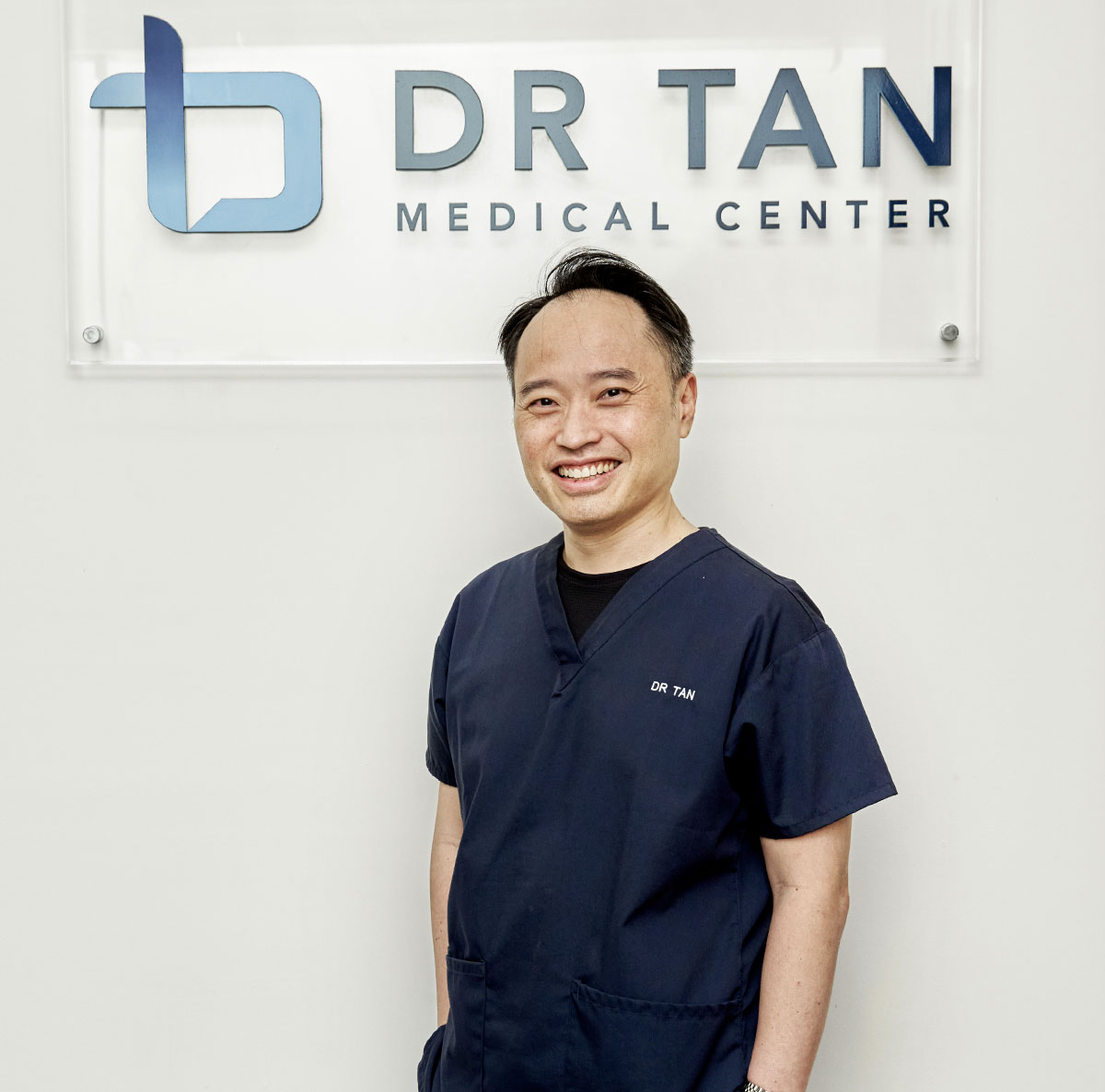
Our Doctor
Our Doctor
Dr Tan Kok Kuan
Men’s Health & Sexual Health Doctor
MBBS (S’pore), Cert. Men’s Health, Cert. Clinical Dermatology,Member, Academy for Men’s Health (Singapore)Member, Singapore Association for the Study of ObesityMember, International Society of Sexual Medicine
Dr Tan Kok Kuan is an experienced doctor specialising in men's health, sexual health and medical weight loss. With over 20 years of clinical experience, he offers confidential and effective screening and treatment services. Notably, Dr Tan was one of the key authors of Singapore’s National HIV PrEP Guidelines and the national blueprint to end HIV transmission by 2030. Dr Tan frequently speaks at local and international conferences and has been featured in the media, where he helps raise public awareness around men’s health and sexual health.
“Every patient deserves our fullest attention.”

10 Sinaran Drive #09-30, Novena Medical Centre, Singapore 307506
Tel: (+65) 6513 0359 | WhatsApp: (+65) 9750 5037
Operating Hours:
Monday to Friday: 8:30 AM to 6:30 PM
Saturday: 9:00 AM to 2:00 PM
Closed on Sundays and Public Holidays


