

How Does Circumcision Differ Between Adults and Children?
Blog

Dr Tan Kok Kuan
Men’s Health & Sexual Health Doctor
MBBS (S’pore), Cert. Men’s Health, Cert. Clinical Dermatology,Member, Academy for Men’s Health (Singapore)Member, Singapore Association for the Study of ObesityMember, International Society of Sexual Medicine

Circumcision in adults and children differs mainly in how the procedure is planned, the type of anaesthesia used and what recovery involves. Adults generally need to account for a longer period of activity restrictions, while children require age-appropriate aftercare and support during healing. The risks and practical considerations can also vary depending on the patient’s age and health.
If you are considering circumcision for yourself, or deciding whether it may be appropriate for your child, these differences may be part of what is making the decision less straightforward.
Understanding how circumcision differs between childhood and adulthood can give you a clearer idea of what to expect and help you have a more informed discussion with a doctor before deciding on the next step.
Key Takeaways
- Age can influence how circumcision is performed, including the choice of anaesthesia, surgical technique and considerations involving the foreskin.
- Circumcision carries risks at any age, although complication rates can differ between adults and children based on their health and individual circumstances.
- Recovery requirements vary between age groups, particularly when returning to school, work, sports and other physical activities.
How Does Age Influence Surgical Planning for Circumcision?
The basic aim of circumcision is the same at any age. However, a doctor will have to take certain traits into account ahead of time, including anaesthesia use, surgical technique and the condition of the foreskin.
Type of Anaesthesia
Adult circumcision can often be performed under local anaesthesia, which numbs the area while the patient remains awake. General anaesthesia may also be considered in certain circumstances.
Newborns and young infants may undergo circumcision with local anaesthesia, while older children are more commonly given general anaesthesia to keep them comfortable and still during the procedure.
Choice of Surgical Technique
Different circumcision techniques may be suitable for different age groups. The doctor will consider the patient’s age, penile size and the instruments or devices appropriate for the procedure.
For example, some device-based techniques are designed for particular age groups or sizes, while conventional surgical circumcision offers flexibility in how the foreskin is removed.
Condition of the Foreskin
The condition of the foreskin often varies between patients of different ages. Adults may have persistent foreskin tightness or scarring that affects surgical planning. In younger children, the foreskin may not yet be fully retractable as part of normal development. The doctor will need to account for these differences when planning the incision and determining how much foreskin to remove.
Are the Risks of Circumcision Different for Adults and Children?
Circumcision carries risks at any age, but the likelihood and type of complication can vary. Research generally reports lower complication rates when circumcision is performed during infancy than later in childhood.
| Age Group | Complication Risk | Factors Affecting Risk |
|---|---|---|
| Newborns and infants | Complication rates tend to be lower | Often performed without an existing foreskin problem |
| Older children | Some studies report higher rates than in infancy | Age and reason for circumcision can affect risk |
| Adults | Complications remain possible | Often performed to treat an existing condition |
When Can Adults and Children Return to Normal Activities After Circumcision?
Recovery after circumcision involves gradually returning to everyday activities while allowing the surgical wound to heal. Although adults and children may resume light activities within a similar timeframe, the time needed before returning to school, work, exercise and other activities can differ.
Returning to School or Work
School-age children can often return to school within 5–7 days, provided they are comfortable walking, sitting and participating in normal classroom activities. However, they may need to avoid physical education and more active forms of play for longer.
Adults with desk-based jobs may also return to work after approximately one week. Those whose jobs involve heavy lifting, prolonged movement or other physically demanding tasks may require additional recovery time.
Resuming Sports and Strenuous Exercise
Both adults and children are generally advised to avoid strenuous exercise, cycling, swimming and contact sports during the initial healing period, often for around 2–4 weeks.
Light activities, such as walking, can usually be resumed earlier as comfort allows. More demanding activities should only be restarted once the wound has healed sufficiently and the doctor has confirmed that it is appropriate.

Circumcision Care for Adults and Children With Dr Tan Kok Kuan
Age plays an important role in circumcision planning, from the choice of surgical technique and anaesthesia to potential complications and recovery requirements. An appropriate approach should account for these differences while prioritising patient safety, comfort and proper wound healing.
At Dr Tan Medical Center, Men’s Health & Sexual Health Doctor Dr Tan Kok Kuan provides personalised circumcision care, with attention to each patient’s age, physical condition and treatment needs. His approach emphasises careful surgical planning and appropriate aftercare to support a safe procedure and smooth recovery.
For adults considering circumcision or parents exploring the procedure for their children, contact our clinic to arrange a consultation and discuss suitable circumcision options and the care involved.
Frequently Asked Questions
Does age affect the long-term outcome of circumcision?
Age can influence healing and the risk of complications, but it does not independently determine the long-term outcome of circumcision. Factors such as the surgical technique, wound healing and any complications during recovery can also affect the final result. Undergoing circumcision at a younger age therefore does not guarantee a better long-term outcome.
Can circumcision affect a child’s penile growth or development?
Circumcision removes the foreskin without removing the structures responsible for penile growth. When performed correctly, the procedure is not expected to interfere with normal penile development. However, complications such as excessive skin removal or scarring can occasionally affect the appearance or function of the penis as a child grows.
Are there conditions that should be assessed before a child is circumcised?
Yes. Certain congenital penile conditions should be identified before circumcision because they may affect whether the procedure is appropriate. For example, children with hypospadias, where the urinary opening is located on the underside of the penis, may need their foreskin preserved for possible corrective surgery. A medical examination can help identify these conditions before circumcision is considered.
How does consent differ between childhood and adult circumcision?
An adult can provide informed consent for their own circumcision once the procedure and its possible risks have been explained. For a child, a parent or legal guardian is generally involved in providing consent. Singapore guidance requires parents or guardians to receive appropriate information before agreeing to a medical procedure involving a minor.
Can problems from a childhood circumcision become noticeable later?
Yes. Certain complications may become more apparent as a child grows. For example, penile adhesions can develop when the remaining shaft skin attaches to the head of the penis. Some minor adhesions resolve naturally, while thicker skin bridges or persistent scarring may require medical treatment. A doctor should assess any ongoing concerns about the appearance or function of the penis.
Meet Our Doctor
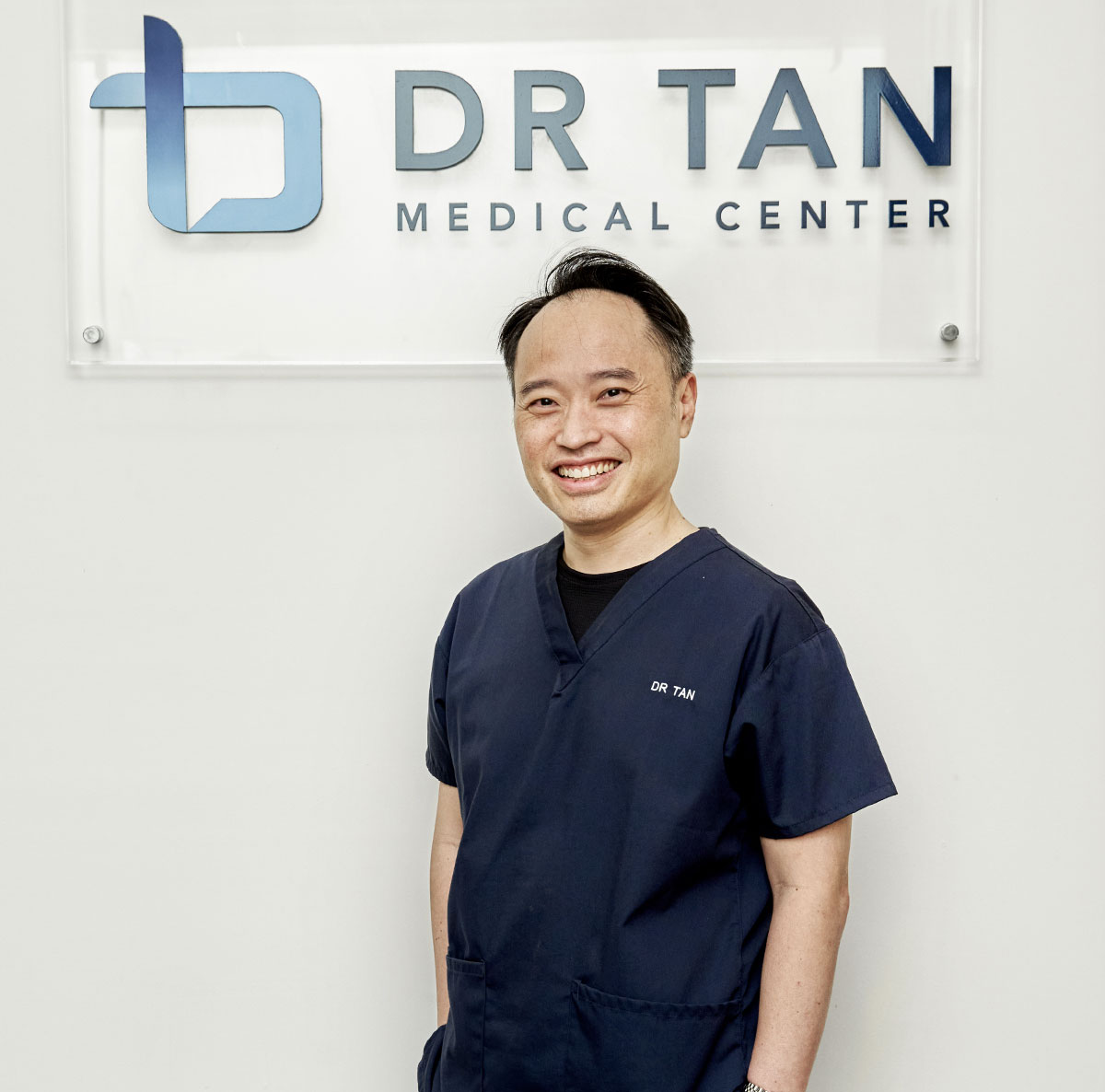
Meet Our Doctor
Dr Tan Kok Kuan
Men’s Health & Sexual Health Doctor
MBBS (S’pore), Cert. Men’s Health, Cert. Clinical Dermatology,Member, Academy for Men’s Health (Singapore)Member, Singapore Association for the Study of ObesityMember, International Society of Sexual Medicine
Dr Tan Kok Kuan is an experienced doctor specialising in men's health, sexual health and medical weight loss. With over 20 years of clinical experience, he offers confidential and effective screening and treatment services. Notably, Dr Tan was one of the key authors of Singapore’s National HIV PrEP Guidelines and the national blueprint to end HIV transmission by 2030. Dr Tan frequently speaks at local and international conferences and has been featured in the media, where he helps raise public awareness around men’s health and sexual health.
“Every patient deserves our fullest attention.”

10 Sinaran Drive #09-30, Novena Medical Centre, Singapore 307506
Tel: (+65) 6513 0359 | WhatsApp: (+65) 9750 5037
Operating Hours:
Monday to Friday: 8:30 AM to 6:30 PM
Saturday: 9:00 AM to 2:00 PM
Closed on Sundays and Public Holidays


