

When Should Men Get Tested for STDs and HIV?
Blog

Dr Tan Kok Kuan
Men’s Health & Sexual Health Doctor
MBBS (S’pore), Cert. Men’s Health, Cert. Clinical Dermatology,Member, Academy for Men’s Health (Singapore)Member, Singapore Association for the Study of ObesityMember, International Society of Sexual Medicine
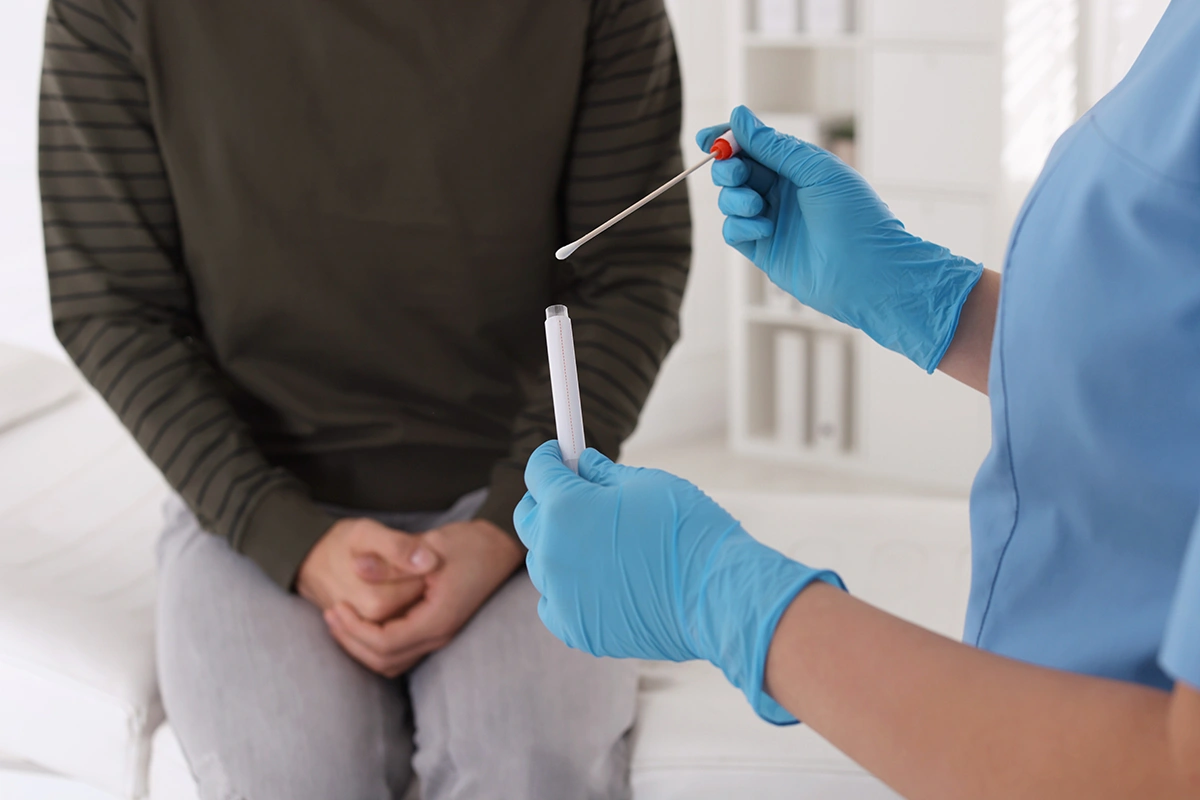
Cases of sexually transmitted diseases (STDs) and HIV (Human Immunodeficiency Virus) do not always present with clear or immediate symptoms, particularly in the early stages. Many infections can remain silent, which means men may be unaware they have been exposed or are at risk, potentially delaying diagnosis and treatment.
Knowing about the ideal circumstances for STD testing is important for maintaining sexual health and preventing transmission to current and future partners. Oftentimes, observing symptoms alone is not enough. This makes it important for men to have a clear understanding of the circumstances that make STD/HIV more likely, allowing them to take a proactive and informed approach to testing.
What Are the High-Risk Factors That Make STD and HIV Testing Needed?
Certain behaviours and situations can significantly increase your risk of contracting sexually transmitted diseases and HIV. Understanding these risk factors can help you decide when testing is necessary and avoid delayed diagnosis.
Unprotected Sexual Intercourse
Engaging in vaginal, oral or anal sex without condoms increases the likelihood of exposure to infections such as chlamydia, gonorrhoea, syphilis and HIV. This risk also exists if protection is used inconsistently or incorrectly.
Having Multiple or New Sexual Partners
The more sexual partners you have, the greater the cumulative risk of exposure. Starting a new sexual relationship without prior testing also increases uncertainty around infection status.
Engaging in Sexual Activity with Partners of Unknown Status
If your partner has not been recently tested or their sexual health status is unclear, there is a higher risk of an undetected infection being transmitted.
Previous History of STDs
A past STD infection can increase susceptibility to future infections, particularly if underlying risk behaviours continue. Some infections can also recur or remain asymptomatic if not fully treated.
Exposure Through Blood or Shared Needles
Although less common in general practice, sharing needles for drug use, tattooing or being exposed to contaminated blood can increase the risk of HIV and other blood-borne infections.
If any of these high-risk factors apply to a patient, it may be advisable for them to seek out regular testing.
What Symptoms May Signal the Need to Get Tested?
Some infections do present with noticeable signs and symptoms. Recognising these early can prompt timely testing and treatment, reducing the risk of complications and transmission.
- Unusual discharge from the penis, which may be white, yellow or green
- Burning sensation during urination
- Genital sores or ulcers
- Itching or irritation in the genital area
- Rashes on the body, palm or soles
- Swelling or pain in the testicles
- Flu-like symptoms in combination with the symptoms above
Even if these symptoms are mild, temporary or resolve on their own, they should not be ignored—especially if they occur after experiencing the high-risk factors stated above. Visiting a men’s health specialist can help provide effective management of these symptoms and relieve discomfort.
What Does an STD/HIV Test Involve?
The STD screening process is typically straightforward, confidential and tailored to your individual risk profile.
Doctor Consultation and Personal Risk Assessment
The process begins with a private consultation where your doctor discusses your symptoms, sexual history and any recent exposures. This allows for a risk-based approach, ensuring that the appropriate tests are selected rather than applying a generic screening panel.
Sample Collection for Testing
Depending on the infections being assessed, samples may include blood, urine or swabs from specific areas such as the urethra or throat. These tests are generally quick and involve minimal discomfort, with different methods used to detect different types of infections.
Receiving Results and Planning Next Steps
How quickly you receive your results can depend on the type of test performed. Certain types of rapid testing can provide same-day results. If any results are positive, the doctor will explain the diagnosis clearly and recommend appropriate STD treatment, follow-up testing and partner notification where necessary.
Why Early Testing Matters Even When You Feel Well
Many STDs and HIV infections can remain asymptomatic, especially in the early stages. This means you may feel completely well while still carrying an infection and unknowingly passing it on to others.
However, the absence of symptoms does not mean the infection is harmless. Without early detection and treatment, several complications can develop over time:
- Progression to more severe disease: Without treatment, HIV can progressively weaken the immune system and develop into AIDS, where the body becomes vulnerable to serious opportunistic infections and life-threatening conditions
- Long-term reproductive complications: Infections like chlamydia and gonorrhoea can lead to epididymitis, which may affect fertility if left untreated
- Systemic spread of infection: Untreated infections such as syphilis can advance through different stages and affect the brain, nerves and cardiovascular system
- Higher likelihood of unknowingly infecting partners: Without testing, infections may be passed between partners repeatedly, prolonging the cycle of transmission
Early testing may allow treatment to proceed before these complications arise. This provides greater clarity and reassurance, helping you take control of your sexual health to protect both yourself and your sexual partners.
Take Control of Your Sexual Health with Timely Testing
Testing should not be seen as a reactive step only taken when symptoms appear. Routine sexual health screening plays an essential role in identifying infections early. Left untreated, conditions such as HIV and other STDs can lead to serious long-term health consequences, making early detection a critical part of effective care.
At Dr Tan Medical Center, men can expect a discreet and structured approach to STD and HIV testing. Each consultation is guided by a personalised assessment, ensuring that screening and treatment plans are tailored to individual risk and needs.
Under the care of Dr Tan Kok Kuan, our men’s health & sexual health doctor, patients receive professional evaluation and evidence-based management in a confidential clinical setting. This may allow for timely treatment, reduces the risk of complications and helps prevent ongoing transmission between partners.
If you have concerns about symptoms or potential exposure, contact us today to find out how we can provide medical advice, accurate testing and comprehensive treatment.
Our Doctor

Our Doctor
Dr Tan Kok Kuan
Men’s Health & Sexual Health Doctor
MBBS (S’pore), Cert. Men’s Health, Cert. Clinical Dermatology,Member, Academy for Men’s Health (Singapore)Member, Singapore Association for the Study of ObesityMember, International Society of Sexual Medicine
Dr Tan Kok Kuan is an experienced doctor specialising in men's health, sexual health and medical weight loss. With over 20 years of clinical experience, he offers confidential and effective screening and treatment services. Notably, Dr Tan was one of the key authors of Singapore’s National HIV PrEP Guidelines and the national blueprint to end HIV transmission by 2030. Dr Tan frequently speaks at local and international conferences and has been featured in the media, where he helps raise public awareness around men’s health and sexual health.
“Every patient deserves our fullest attention.”

10 Sinaran Drive #09-30, Novena Medical Centre, Singapore 307506
Tel: (+65) 6513 0359 | WhatsApp: (+65) 9750 5037
Operating Hours:
Monday to Friday: 8:30 AM to 6:30 PM
Saturday: 9:00 AM to 2:00 PM
Closed on Sundays and Public Holidays


